
The Real Cost of Daycare (And How to Plan For It Early)
Most people don’t think seriously about childcare costs until they’re staring down a due date, and by then, there’s a lot less room to plan. The numbers are bigger than most people expect, they vary wildly by location, and there are more ways to soften the blow than most parents realize exist. Here’s the real picture, and how to start preparing before you actually need it.
What Daycare Actually Costs in 2026
The national average for full-time infant center-based care is running around $1,200-$1,300/month, or roughly $14,000-$17,000/year — and that’s just the average. Costs vary dramatically by age and location.
By age group (national averages):
- Infant care: ~$1,200-$1,300/month (highest cost, due to strict staff-to-child ratios)
- Toddler care: ~$1,080/month
- Preschool age: ~$920/month
- School-age/after-school care: ~$770/month
Why infant care costs so much more: most states require roughly one caregiver for every 3-4 infants, compared to one caregiver for 10-12 preschoolers. That staffing ratio directly drives the price difference — infant care can run 15-50% higher than care for an older child at the very same facility.
The Massive Gap by State
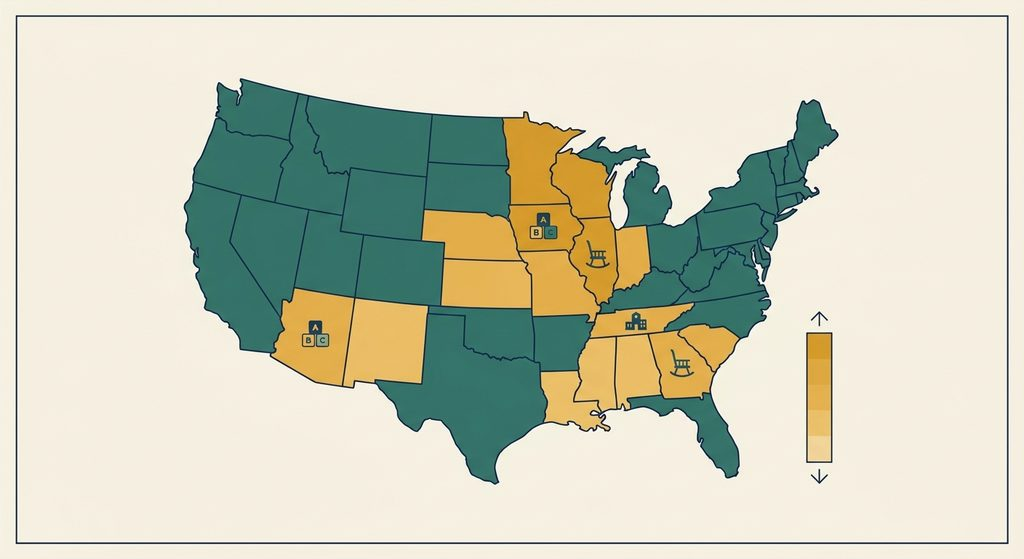
Where you live matters more than almost any other factor. State averages for infant care range from around $650/month in Mississippi to over $2,400/month in Washington, D.C. — a gap of roughly $21,000/year between the cheapest and most expensive states. High-cost states like Massachusetts and California often see infant care averaging $2,500-$3,200/month, which frequently exceeds median rent in those same markets.
Practical takeaway: if you’re planning a move, comparing childcare costs between cities should be part of your relocation math the same way rent and salary are — the difference between states can easily exceed a car payment every single month.
How Much of Your Income Should Go to Childcare?
The U.S. Department of Health and Human Services considers childcare “affordable” when it consumes no more than 7% of household income. In reality, most families blow well past that — data shows the median cost of care for a single child can require close to 19-20% of a family’s income, and in high-cost states, infant care alone can consume 15-25% of a typical family’s earnings.
This gap between the “affordable” benchmark and actual reality is exactly why so many families feel blindsided — the government’s own definition of affordable simply doesn’t match the market.
Daycare Center vs. Family Home Daycare vs. Nanny: Cost Comparison
- Center-based daycare: the most common option, typically the price point referenced in national averages above
- Family/home-based daycare: usually runs 20-30% less than center-based care for comparable quality, though availability and consistency (backup coverage during illness/vacation) can be less reliable
- Nanny care: the most expensive option, averaging around $2,700/month nationally — and that figure typically doesn’t include employer-side payroll taxes if you’re hiring formally, which adds another real cost most families don’t budget for upfront
What Actually Reduces the Cost
A few programs and strategies genuinely help, and most families don’t use all of them:
1. Dependent Care FSA (Flexible Spending Account) If your employer offers one, you can set aside pre-tax dollars (up to a federal limit) specifically for childcare expenses, reducing your taxable income while covering a real cost you’re already paying.
2. Child and Dependent Care Tax Credit This is a separate benefit from the FSA — a tax credit based on a percentage of your childcare expenses, which directly reduces your tax bill rather than just your taxable income. You generally can’t double-dip the same dollars across both the FSA and the credit, so it’s worth understanding which combination benefits your specific income level more.
3. Employer Tri-Share or subsidy programs Some states and employers now offer Tri-Share programs, where the cost is split three ways between the employer, the state, and the parent — worth asking your HR department directly, since these programs aren’t always advertised prominently.
4. Free or subsidized options Head Start and state-funded Pre-K programs are free for eligible families, though they typically start at age 3-4 rather than covering infant/toddler care, and often have income eligibility requirements or waitlists worth researching early.
How to Start Budgeting Before the Baby Arrives
Since infant care is both the most expensive category and often has the longest waitlists, early planning matters more here than almost any other family expense:
- Research actual local prices during pregnancy, not after the baby is born — many quality daycare centers have waitlists that start before birth.
- Build the estimated monthly cost into your budget now, even before you need it, so the transition into paying for care doesn’t collide with the transition into new-parent expenses all at once.
- Check FSA enrollment windows at your job — these often only open during specific enrollment periods, so timing matters if you want the tax advantage from day one.
- Compare center-based, home-based, and nanny-share options — a nanny share (splitting a nanny’s cost with another family) can sometimes land price-wise between home daycare and solo nanny care while offering more individualized attention than a large center.
- Ask about sibling discounts and multi-child math early if you’re planning more than one child close in age — some centers offer reduced rates for a second enrolled sibling.
The Bottom Line
Childcare costs are one of the biggest and most under-planned expenses in early parenthood — often rivaling or exceeding a mortgage payment, yet families frequently don’t start budgeting for it until they’re already deep into pregnancy or, worse, after the baby has arrived. The families who handle this cost best are the ones who treat it like a major line-item decision months in advance, not a surprise bill that shows up alongside a new baby.
This post reflects national and state childcare cost averages as of 2026, based on federal and industry data sources. Actual costs vary significantly by city, provider, and child’s age — check local providers directly for current rates.