The Envelope Method, Rebuilt for a Cashless World
Your grandparents had a simple way to stop overspending: put cash in labeled envelopes, and when an envelope was empty, the spending was over. The idea is still popular today, and videos about cash stuffing and the envelope system have drawn billions of views on TikTok.
The problem is that most of us barely touch cash anymore. Here’s how to keep what made envelopes work and drop the paper.
Why the Envelope Method Works
The method works because it sets a limit before the money is spent. Once an envelope runs dry, there’s nothing left to debate. The decision was made before you ever spent a dollar. That’s also why it’s so hard to overspend with it, and why it only works if you start with a real budget.
Where Cash Falls Short Today
Physical envelopes come with real friction:
- You can’t pay online bills, subscriptions, or delivery orders with paper.
- Carrying cash around feels risky, and a lost envelope is gone for good.
- Money parked in an envelope doesn’t grow, while the same amount in a savings account can earn interest.
Going digital has a cost too. Watching paper bills leave your hand makes spending feel more real than watching a number shrink on a screen. A digital version has to work a little harder to feel real.
How to Create a Budget With Digital Envelopes
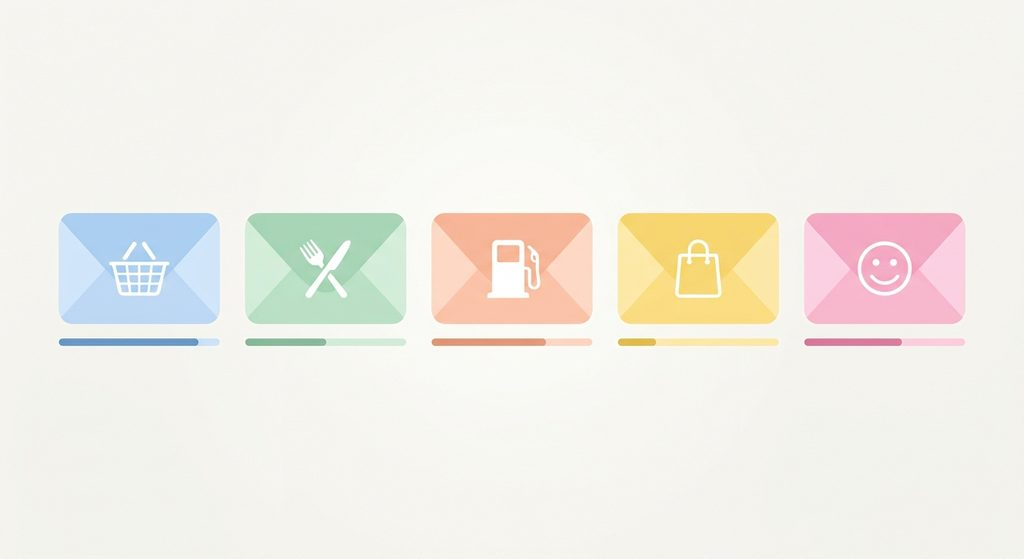
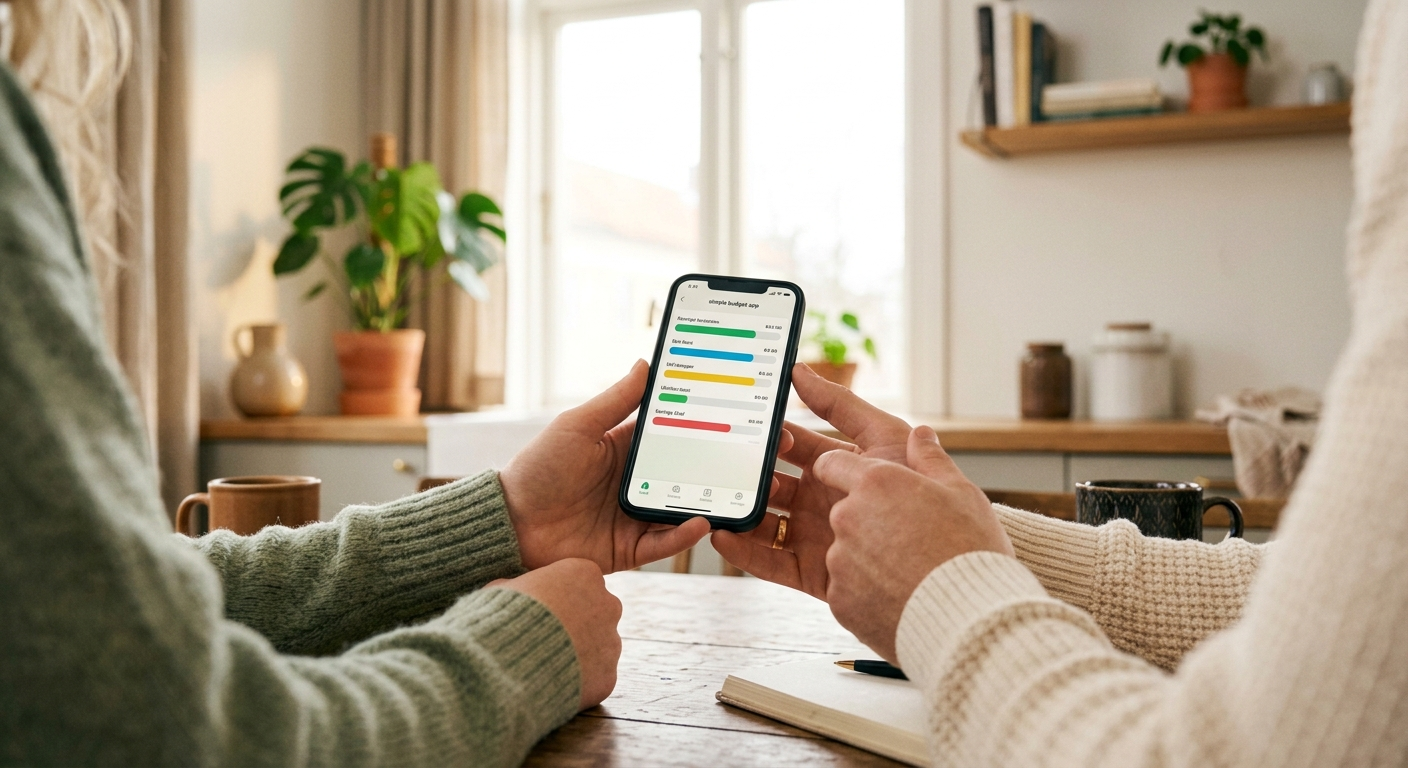
Digital envelopes follow the same principles as the cash version, using an app, a spreadsheet, or your online banking to hold each “envelope.” Here’s the setup:
- List your fixed bills first. Rent, insurance, and loan payments don’t need envelopes. They get paid automatically.
- Pick your spending categories. Choose the 4 to 6 areas where you tend to overspend, such as groceries, eating out, gas, shopping, and fun.
- Set a monthly amount for each. Use last month’s actual spending, not what you wish you’d spent.
- Fund each envelope on payday. Move the money into its own bucket right away.
- Spend only from the matching envelope. When it hits zero, you stop, or you deliberately move money from another envelope.
Example on $3,500 take-home pay: after fixed bills and savings, you might assign groceries $450, eating out $150, gas $200, fun $100, and shopping $100. These numbers are only an illustration, so adjust them for your own life.
Three Ways to Build Digital Envelopes
- Bank sub-accounts or “buckets.” Some banks and apps let you create named savings spaces. Open one per category and send money to each on payday. Because most savings buckets can’t be spent from directly, transfer only what each envelope holds.
- A budgeting app. Apps like YNAB and Monarch Money are built around envelope-style categories. Most charge a subscription, so check current pricing.
- A simple spreadsheet. It’s free and flexible, but you’ll have to update it yourself.
How to Budget Money for Beginners: Keep It Small
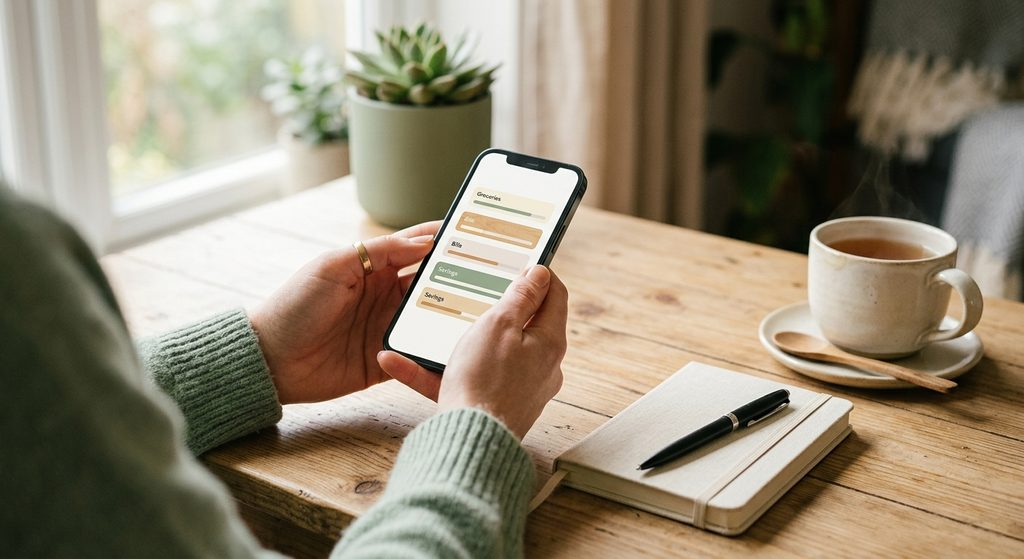
Don’t build fifteen envelopes on day one. Start with the two or three categories where money disappears fastest, usually food and shopping, and add more once the habit sticks.
If your income varies from month to month, set your envelope amounts from your lowest typical paycheck. This guide on how to budget when your income isn’t the same every month walks through it.
How Do You Manage a Budget Once the Envelopes Are Set Up?
Going digital takes away the built-in limit that cash gives you, so add your own:
- Protect the limits. Swiping a card feels painless, so digital envelopes only work if you stay strict about online and credit card purchases. Keep these categories off your credit cards, and pay each one only from its own bucket or a debit card tied to it, if your bank offers that.
- Check balances weekly. A five-minute look keeps small overspending from snowballing.
- Set low-balance alerts in your banking app so you hear about a nearly empty envelope before it’s empty.
The Hybrid Option
You don’t have to go fully digital. A middle path is to automate big bills like rent or mortgage and utilities, then keep cash for the one or two categories you struggle with, like groceries or eating out. If one category keeps getting away from you, a few paper envelopes for just that category can help.
The Bottom Line
The envelope method isn’t about paper. It’s about deciding how much each category gets before the money moves, and treating an empty envelope as a hard stop. Rebuild it with sub-accounts, an app, or a spreadsheet, start with just a few categories, and the same old trick works in a cashless world.
This post reflects budgeting guidance and tool features as of 2026. App pricing and bank features change often, so check current details before signing up. This is general information, not financial advice.