
How to Budget When Your Income Isn’t the Same Every Month
Most budgeting advice assumes something that simply isn’t true for a huge share of workers: a steady, predictable paycheck landing on the same date every month. If you freelance, work commission, do seasonal or gig work, or run your own small business, that assumption doesn’t just feel off — it makes traditional budgeting advice borderline useless.
You’re not alone in this, and there’s a real, workable system for it.
You’re Part of a Bigger Group Than You Think
More than 80% of gig workers report experiencing at least some income unpredictability, and 57% describe their income as varying significantly month to month. The Bureau of Labor Statistics classifies over 16 million Americans as working in “alternative arrangements” — temp agency workers, on-call workers, independent contractors, and similar setups where a steady paycheck simply isn’t part of the deal.
The emotional side of this is real too: roughly a third of gig workers describe their income as “uncertain,” and more than 70% say they’re at least moderately worried about income swings. If budgeting has felt genuinely harder for you than it seems to for people with salaried jobs, that’s not a personal failing — the tools most people are handed simply weren’t built for your situation.
The Core Mistake: Budgeting Off Your Average or Your Best Month
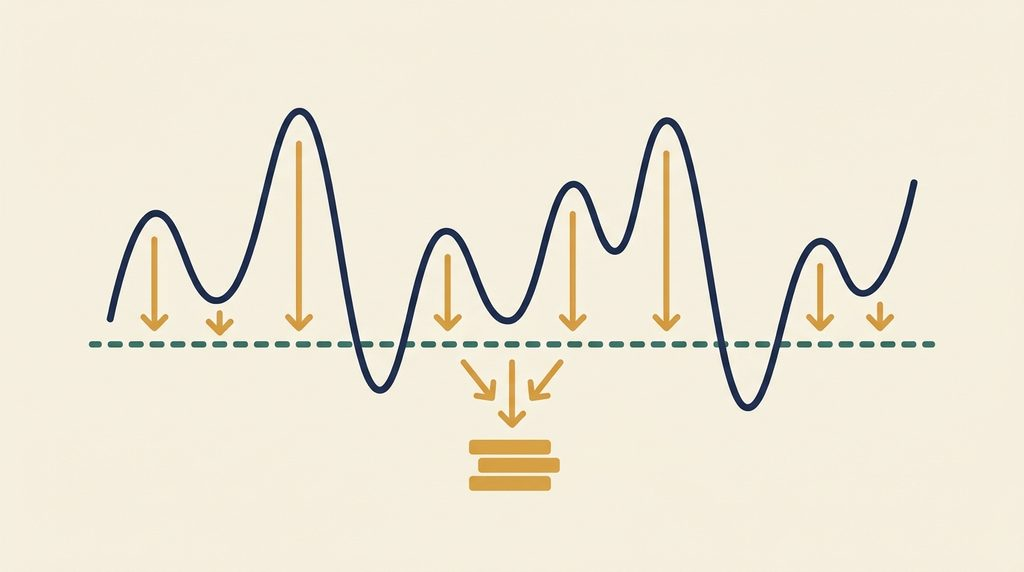
The single most common budgeting mistake with irregular income is building your budget around your average earnings, or worse, a recent good month. It feels natural — average feels “fair” — but it sets you up to overspend in the months that fall below that number, which, by definition, is half your months.
The fix: baseline income budgeting. Look back at your last 6-12 months of income, identify your lowest-earning month (or a conservative estimate close to it), and build your essential expense budget around that number instead. If you budget low, you can always adjust upward when a good month arrives — but overestimating and having to scale back later puts you in a genuinely tight spot, often right when an unexpected expense hits too.
Setting Up the Buffer Account System
Once you know your baseline, the next step is separating your income from your spending using a buffer account:
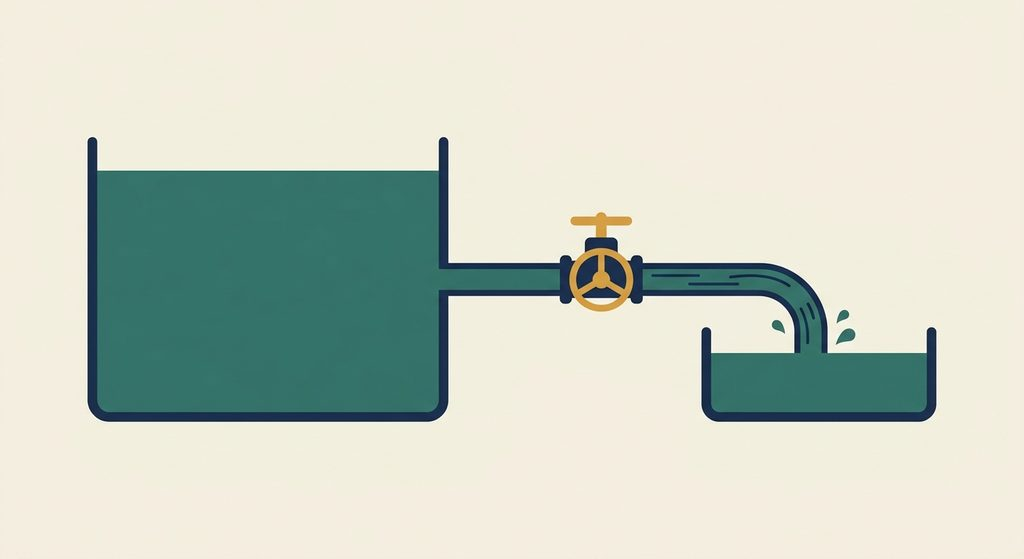
- All income lands in one account — a savings or “holding” account, not your everyday checking.
- Transfer a fixed amount to your checking account each month — your baseline number, paid to yourself the way an employer would pay a steady paycheck.
- Anything above that baseline stays in the buffer, building a cushion for lean months.
- In a month where income falls short of your baseline, you pull the difference from the buffer instead of scrambling or going into debt.
This single change — turning irregular income into a self-generated steady paycheck — is what most budgeting guides for freelancers and gig workers agree matters more than any specific app or spreadsheet.
The Percentage Method for Extra Income
Once your baseline is covered and your buffer account is reasonably funded, a percentage-based system helps you decide what to do with anything earned above that number, without decision fatigue every time a bigger payment comes in.
A sample structure:
- 50% → buffer account (until fully funded, typically 3-6 months of essential expenses)
- 30% → debt payoff
- 15% → a specific savings goal (vacation, big purchase, etc.)
- 5% → discretionary/fun spending
As your income grows, your savings and debt payoff grow proportionally too — no need to manually recalculate fixed dollar amounts every time your earnings shift.
Don’t Forget: Taxes Come Out First, Not Last
If you’re self-employed rather than a W-2 employee with variable hours, taxes need their own separate slice before anything else gets allocated. A common guideline is setting aside 25-30% of every payment received into a dedicated tax account, since no employer is withholding anything on your behalf, and the IRS expects quarterly estimated payments regardless of how uneven your income actually is throughout the year.
Income Averaging: A Useful Backup, Not a Replacement
Some budgeting approaches suggest using a 3-6 month rolling average instead of your absolute lowest month — this can work well once you have enough income history to smooth out normal fluctuations, giving you a realistic middle-ground number rather than either your worst or best month. This tends to work best for people whose income varies moderately (a freelancer with fairly steady client work), while the baseline/lowest-month method is safer for people with true feast-or-famine swings (seasonal work, inconsistent gig platforms).
What Essential Expenses to Prioritize First in Your Baseline
When you’re building your baseline number, prioritize in this order:
- Housing and utilities
- Minimum debt payments
- Food and transportation
- Insurance premiums
Everything else — subscriptions, discretionary spending, extra debt payoff — should come from the percentage-based system applied to income above your baseline, not be baked into a number you might not hit every single month.
A Simple System to Start This Month
- Pull your last 6-12 months of income and identify your lowest month (or a conservative close estimate if your history is shorter).
- Open a separate buffer/holding account if you don’t already have one.
- Set your baseline “paycheck” amount and start transferring it to checking monthly, regardless of what actually came in that month.
- Set aside 25-30% for taxes immediately if you’re self-employed, before anything else touches that income.
- Apply a percentage split to anything earned above your baseline, rather than deciding case by case.
The Bottom Line
Irregular income doesn’t mean budgeting is impossible — it means the traditional monthly-paycheck model doesn’t apply, and you need a system built for feast-or-famine cycles instead of fighting against one designed for someone else’s paycheck schedule. Building your budget around your lowest month, not your average, is the single change that turns unpredictable income into something you can actually plan around.
This post reflects gig economy income data and budgeting guidance as of September 2026. Individual situations vary — consult a financial professional for guidance specific to your income structure.



One Comment
Comments are closed.